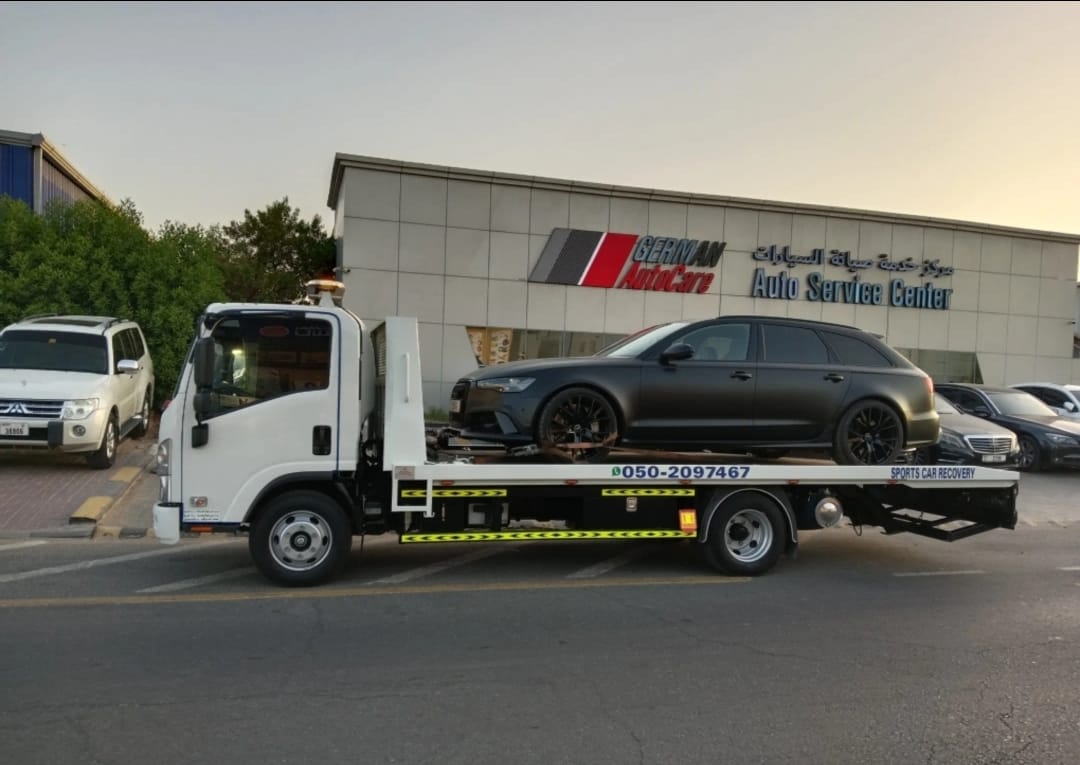
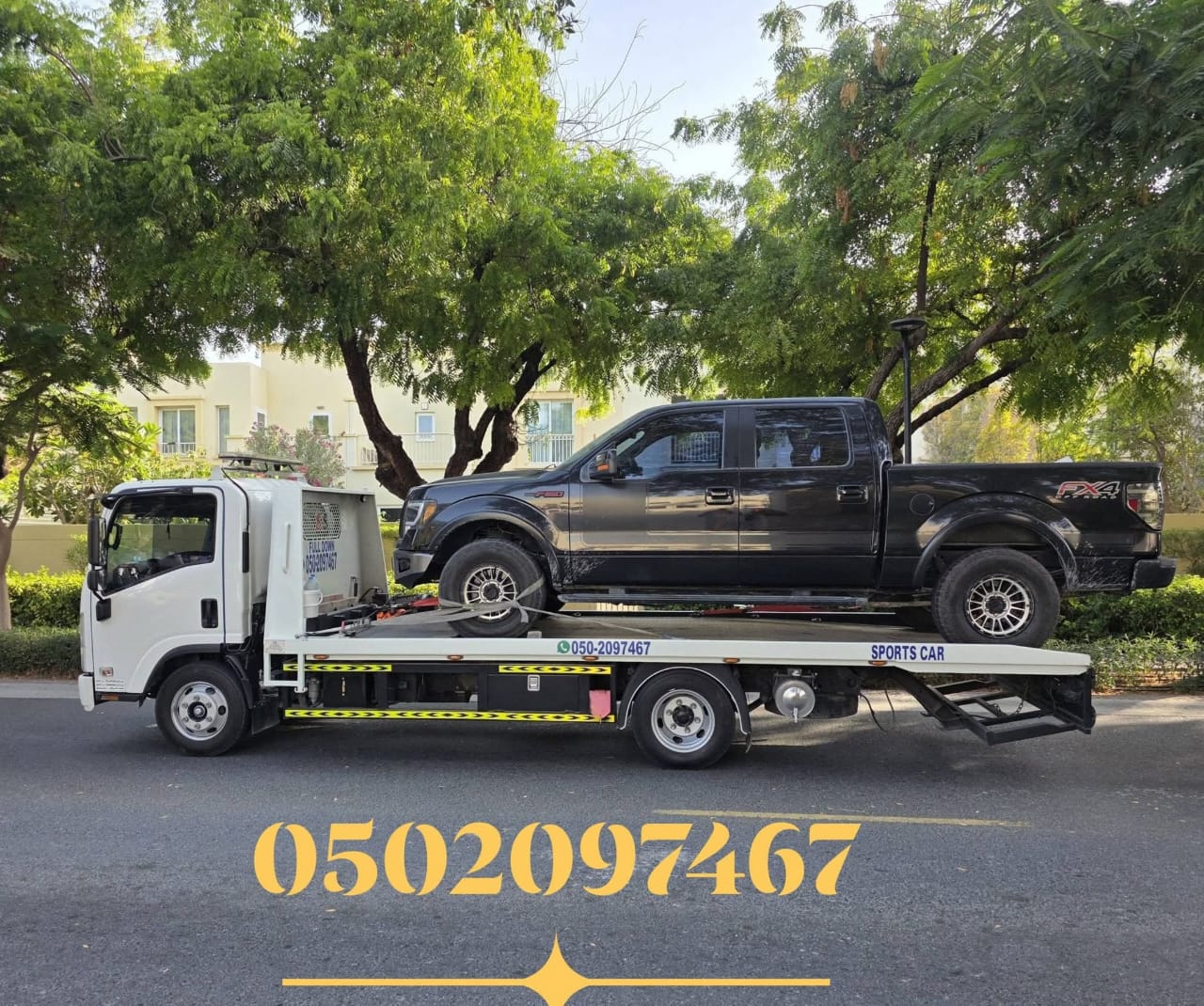
The 5 Steps When Your Car Breaks Down in Dubai
⚡ Quick Reference — Do This Immediately
- Pull over to the left — hard shoulder or emergency area
- Turn on hazard lights — immediately
- Place warning triangles — 50m behind (100m on highway)
- Exit safely — from passenger side, stand behind barrier if on highway
- Call Ahmed Car Recovery — +971 50 209 7467
Step 1: Pull Over Safely and Immediately
The moment you notice something wrong with your car — unusual noises, warning lights, loss of power, or steering issues — begin moving toward the left lane immediately. Do not continue driving and hope the problem resolves.
On highways (Sheikh Zayed Rd, Al Khail Rd, Emirates Rd), pull to the hard shoulder as far left as possible. On city roads, pull into a side street, car park entrance, or any space away from moving traffic.
If your car is immovable: If the engine cuts completely with no warning, put on your hazard lights and try to coast to the shoulder. If you can't move, stay in the car with your seatbelt on until emergency services arrive — especially on a fast road.
Step 2: Activate Your Hazard Lights
This should be your very first action — even before you've fully stopped. Hazard lights warn other drivers that something is wrong with your vehicle. In Dubai's fast-moving traffic, this is critical for your safety.
Keep hazard lights on for as long as your vehicle is stationary on or near a road.
Step 3: Place Warning Triangles (UAE Legal Requirement)
Under UAE traffic law, all drivers are required to carry and deploy warning triangles. Failure to place them is an offence and puts you at serious risk of a rear collision.
- On city roads: Place triangle 50 metres behind your vehicle
- On highways: Place triangle at least 100 metres behind your vehicle
- Use reflective triangles, not just cones or flares
Step 4: Exit Your Vehicle Safely (If on a Highway)
If you are on a high-speed road, exiting the vehicle requires care:
- Exit from the passenger side (away from traffic)
- Move behind the crash barrier — never stand between your car and traffic
- Keep children and passengers behind the barrier
- Do not attempt to fix the vehicle yourself on a highway
- If you cannot exit safely (traffic too close), stay inside with seatbelts on
Step 5: Call for Recovery and Share Your Location
Once you are safe, call Ahmed Car Recovery at +971 50 209 7467 or send your location via WhatsApp. Tell us:
- Your exact location (nearest landmark or Google Maps pin)
- Your vehicle make, model, and colour
- What the problem appears to be
- Whether you are on a highway or city road
We'll give you an ETA and dispatch immediately. Our 15–30 minute response target means you won't be waiting long.
Breakdown on a Dubai Highway — Special Considerations
Dubai's highways carry traffic at 100–140 km/h. A breakdown here is a serious safety situation that requires extra caution:
- Never stand on the road between your car and oncoming traffic
- Place warning triangles further back — 100–150m minimum
- Use your phone torch or a reflective vest if it's dark
- Call Dubai Police on 999 if you feel unsafe or if the breakdown is causing a hazard
- Tell the recovery team you're on a highway — this changes our approach and equipment
Breakdown in a Basement Car Park
If your car breaks down in a basement or underground car park in Dubai:
- Hazard lights on — even underground
- If possible, push the car to a space that doesn't block traffic lanes
- Inform the building security so they're aware and can assist
- Call us and describe the building name, basement level, and your parking spot
- We have specialist basement recovery equipment for underground car parks
What If Your Car Breaks Down on Al Qudra Road or Desert Routes?
Desert and desert-fringe roads require extra preparation and different actions:
- Stay with your vehicle — it's visible; you on foot in the desert is not
- Share your live GPS location via WhatsApp immediately
- Conserve phone battery — use it only for calls and location sharing
- Stay in shade (inside or under your vehicle) to avoid heat exhaustion
- If you have water in the car, stay hydrated — do not panic