
Desert Breakdown Prevention: A Dubai Driver's Guide
Desert breakdown prevention comes down to four things: correct tyre pressure for sand, enough water and fuel, basic recovery gear, and knowing when to stop trying and call for help. Most dune recoveries we perform were avoidable — the driver went in on highway tyre pressure, alone, with a quarter tank of fuel. This guide makes sure that driver is not you.
What tyre pressure works in sand?
This is the single biggest factor. On tarmac your tyres run at 30–35 PSI with a small, hard contact patch — perfect for roads, terrible for sand, where they dig straight down. For soft sand, deflate to 15–18 PSI. The tyre flattens and widens, the contact patch grows, and the car floats over the surface instead of ploughing through it.
- Carry a portable 12V compressor and a pressure gauge. Non-negotiable — without them you cannot re-inflate for the drive home, and under-inflated tyres overheat and can blow out at highway speed.
- Re-inflate before tarmac. Every single time. The petrol station air pump is fine if your compressor fails.
- Check the spare too. A flat in the desert with a flat spare turns an inconvenience into a recovery call.
What should I carry into the desert?
Pack for the scenario where you are stuck for hours, not minutes. The checklist:
- Water: at least 5 litres per person — for drinking first, the radiator second. In summer, double it.
- Fuel: leave with a full tank. Soft sand driving can double or triple normal consumption, and the nearest station may be far.
- Recovery basics: tow strap or kinetic rope (rated for your vehicle's weight), a shovel, and traction boards if you dune regularly.
- Compressor and gauge (see above), plus a tyre repair kit.
- Phone: fully charged, with an offline map downloaded — signal dies in remote dunes. A power bank is cheap insurance.
- Shade and sun protection: hats, sunscreen, and something to sit on. Midday desert sun is brutal when you are waiting.
And the best recovery gear of all: a second vehicle. Convoy driving means a stuck car is a ten-minute pull, not a recovery call. Never dune alone in remote areas.
What should I do the moment I get stuck?
- Stop. The instant you feel the car bogging down, lift off the throttle. Spinning the wheels digs the car deeper — every rotation makes the recovery harder and more expensive.
- Deflate further if you have not already (down toward 12–15 PSI as a last resort).
- Clear sand from in front of all four tyres with the shovel, and create a gentle ramp of packed sand ahead of the driven wheels.
- Rock gently: low gear, easy throttle, rocking between drive and reverse to build momentum. Two or three attempts maximum.
- Straighten the steering. Turned wheels act like ploughs in sand.
If the car is not moving after a few careful attempts — stop and call for help. Continued attempts overheat the transmission and bury the chassis on its belly, turning a simple pull-out into a full winch recovery. This is the exact moment to call our desert recovery team: tell us your pin location, and a 4x4 rig with a winch comes to you.
How do I avoid overheating in the desert?
Desert driving stresses cooling systems hard: low speeds, high revs, 45°C+ air. Before any desert trip, check coolant level, look for leaks, and make sure the radiator fans kick in. If the temperature gauge climbs: turn off the AC, turn the heater to full hot (it pulls heat from the engine — uncomfortable but effective), and stop in shade if it keeps rising. Never open a hot radiator cap. An overheated engine that keeps running becomes a seized engine — and a much bigger bill than a recovery call.
What are the desert driving rules I should follow?
- Tell someone your plan: route, entry point and expected return time. If you do not check in, they raise the alarm.
- Stay on known tracks unless you are experienced and equipped. Protected areas and private land are off-limits — fines apply.
- Drive in daylight when possible. Dune shapes are invisible at night and drop-offs appear from nowhere.
- Watch the weather: avoid wadi areas if rain is forecast anywhere upstream — flash floods are fast and deadly.
- Respect wildlife and other users: slow down near camps and camel farms.
When should I call professional desert recovery?
Call us when the car is beached on its chassis, when self-recovery attempts have failed, when you are alone in a remote area, or when anyone feels unwell from the heat. Our desert recovery rigs carry winches, kinetic ropes, compressors and sand ladders, and our drivers do this daily. Desert recovery costs AED 150–250 depending on location and difficulty — confirmed on the phone before we roll. Full pricing details are in our towing cost guide.
Stuck in the sand right now? Send us your pin.
Our Al Quoz dispatch team answers 24/7. Call now and a recovery truck will be on its way in minutes.
Desert Recovery Is Real Work
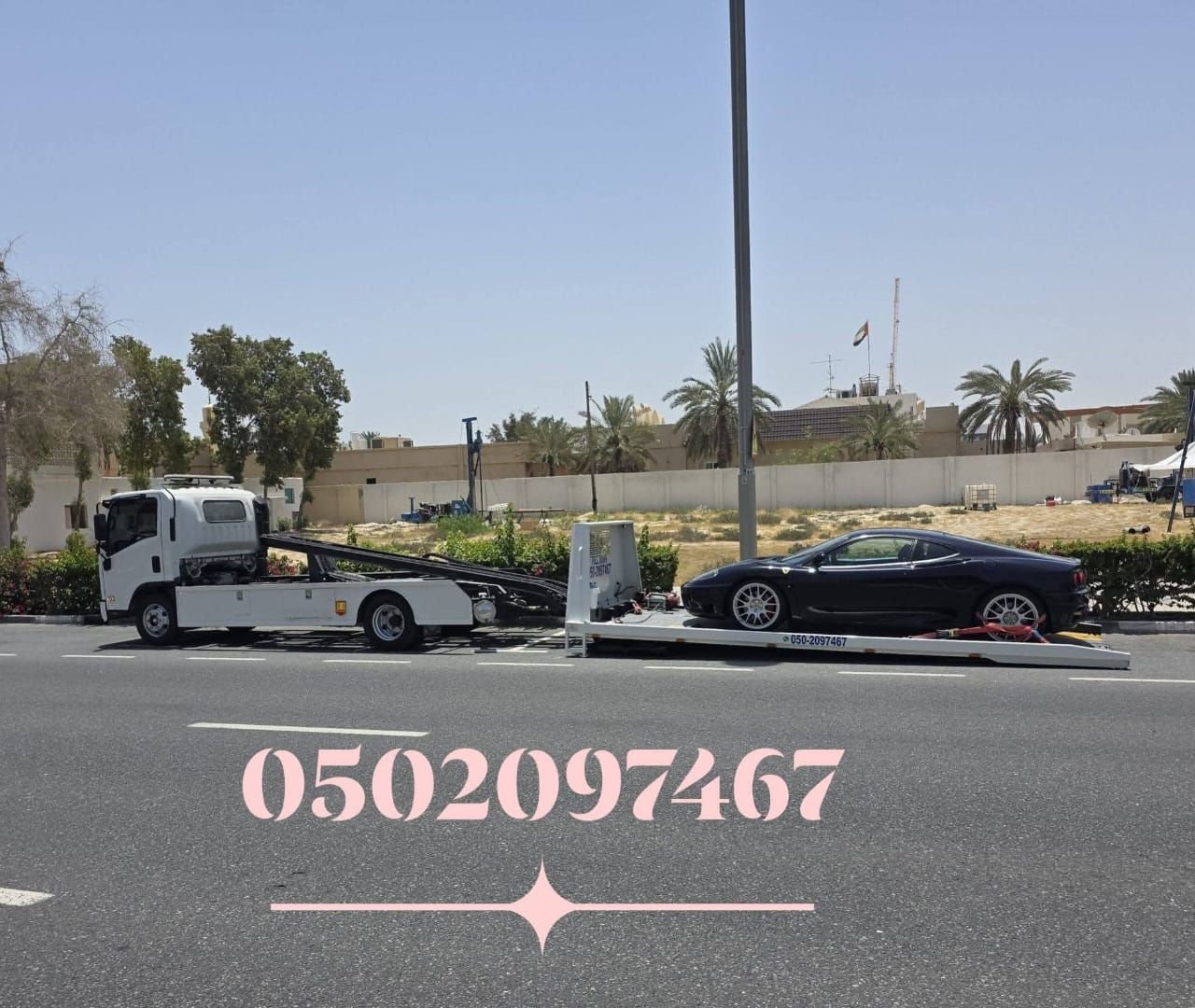
Real photos from our daily recovery work in Dubai.
Frequently Asked Questions
What tyre pressure should I use for desert driving in Dubai?
Drop to around 15–18 PSI for soft sand — the wider footprint floats instead of digging in. Highway pressure (30–35 PSI) is the number one cause of getting stuck. Carry a portable compressor and a gauge so you can re-inflate before driving home on tarmac, because under-inflated tyres overheat and can fail at speed.
What should I carry for desert driving?
At minimum: plenty of water (for people first, the car second), a full fuel tank, a portable air compressor, a tyre pressure gauge, a tow strap or kinetic rope, a shovel, and a fully charged phone with an offline map. A second vehicle is the best recovery gear of all — never dune-drive alone in remote areas.
What should I do when my car gets stuck in sand?
Stop immediately — spinning the wheels only digs you deeper. Deflate the tyres further if you have not already, clear sand from in front of all four tyres, and try rocking gently between drive and reverse. If that fails within a few attempts, stop and call a professional desert recovery service rather than burning out your transmission.
Is it safe to drive in the desert alone?
It is risky, especially in summer and in remote areas without phone signal. Always tell someone your route and expected return time, carry more water than you think you need, and stick to popular areas like Al Qudra if you are solo. If anything goes wrong, a 4x4 recovery rig with a winch is the safe way out.
How much does desert recovery cost in Dubai?
Desert and off-road recovery costs AED 150–250 depending on how far into the desert you are, how badly the vehicle is stuck, and the equipment needed. A simple pull-out near the road sits at the lower end; a deep-dune winch-out with a 4x4 rig sits at the higher end. We confirm the exact price before dispatch.